
Medical Review & Editorial Authority
Written by: Sarah Jenkins, Senior Wellness Specialist
Medically Reviewed by: Carter Brown, Clinical Content Director
Last Updated: November 2026
Why Am I So Hungry at Night? The Hidden Glucose-Cortisol Loop Disrupting Your Sleep
You finish a satisfying dinner, settle into the evening, and yet like clockwork at 10:00 PM, or even worse when waking up at 3:00 AM, your brain demands carbohydrates. If you frequently find yourself asking why am I so hungry at night, you are far from alone. For millions of adults over 40, late-night cravings are not a failure of willpower or a bad habit. They represent a direct physiological signal triggered by disrupted nocturnal biochemistry.
Nighttime hunger creates a frustrating cycle. You eat to fall asleep, only to wake up feeling sluggish, bloated, or facing morning blood sugar spikes. Understanding the root cause of nighttime starvation requires looking beneath the surface of appetite into the complex relationship between insulin, nocturnal cortisol, and circadian sleep architecture.
Key Takeaway: The Nocturnal Hunger Trigger
Late-night hunger is primarily driven by nocturnal hypoglycemia, elevated night cortisol, and insulin resistance. When blood sugar drops sharply overnight, the brain releases cortisol and ghrelin—the hunger hormone—forcing you awake to seek fast-acting glucose, disrupting deep REM sleep cycles and metabolic recovery.
The Science of Late-Night Cravings: Glucose Drops and Cortisol Spikes
When metabolic function is optimal, your body transitions into a fasting state during sleep. Insulin levels stabilize, growth hormone promotes cellular repair, and leptin signals to the brain that no food is needed until morning. However, when insulin resistance or erratic daytime carbohydrate intake is present, this balance collapses overnight.
As you sleep, an unstable glucose curve causes blood sugar levels to plummet rapidly around midnight or 3:00 AM. Recognizing a potential metabolic deficit, the adrenal glands pump out cortisol and adrenaline to initiate gluconeogenesis, which is the process of creating glucose from stored glycogen. This emergency stress response instantly wakes the brain and stimulates intense cravings for quick energy sources, specifically sugar and refined starches.
Clinical Insight: Insulin & Nocturnal Ghrelin
Insulin resistance prevents cells from efficiently utilizing glucose during sleep. This intracellular starvation triggers ghrelin release while suppressing leptin. Consequently, waking up starving at night is a physiological defense mechanism designed to restore circulating glucose, even when total daily caloric intake is entirely sufficient.
This internal friction creates a destructive feedback loop. The more your blood sugar fluctuates during the evening, the higher your nighttime cortisol rises. To understand how stabilizing these micro-spikes can protect your sleep architecture, read our breakdown on the glucose cortisol loop and 3am wake ups, which details how stress hormones hijack deep sleep.
If late-night hunger is keeping you awake or spiking your morning fasting glucose, targeting nighttime metabolic stability is essential. Clinical research shows that balancing glucose sensitivity before bed halts the adrenal stress response that triggers appetite surges, a principle thoroughly explored in our Sugar Defender 2026 review.
Why Do I Always Wake Up Hungry? Key Metabolic Drivers
Waking up starving in the middle of the night is distinctly different from mild evening snacking. When hunger forces you out of bed, your sympathetic nervous system has taken control. Below are the primary physiological drivers responsible for why am I so hungry at night time even after eating a full dinner.
1. Hidden Insulin Resistance and Poor Glucose Clearance
If your body struggles to transport glucose into cells efficiently, your muscles and organs remain energy-deprived despite high blood sugar levels. During the night, this cellular energy crisis signals the brain that starvation is occurring, driving intense late-night cravings for fast carbohydrates.
2. Mineral Deficiencies Disrupting Sleep Deepness
Certain essential minerals play a direct role in regulating both neurotransmitters and muscle relaxation. Magnesium deficiency, for instance, impairs cellular glucose transport and keeps the nervous system in a state of hyper-arousal. Exploring magnesium glycinate for sleep shows how specific mineral forms help calm late-night nerve stimulation and stabilize sleep quality.
Scientific Overview: Nocturnal Fat Metabolism
During deep REM and slow-wave sleep, the body naturally relies on fat oxidation for energy. When nighttime insulin remains elevated due to late carb consumption, fat burning shuts down, forcing the body to wake up seeking immediate glucose instead of burning stored lipids.
3. Circadian Disruption and Shifted Hormonal Rhythms
Irregular sleep patterns, artificial light exposure after dark, or chronic stress alter the natural secretion of ghrelin and leptin. When circadian alignment fails, appetite hormones peak at midnight rather than during mid-day hours.
For individuals working to optimize nighttime metabolism while controlling evening appetite, addressing cellular absorption is critical. Many oral supplements lose potency during digestion, which is why examining pills vs patches for sleep absorption provides vital context on delivering active ingredients effectively throughout the night.
If late-night cravings are impacting your weight and sleep quality, combining appetite regulation with nocturnal caloric expenditure offers a dual solution for nighttime metabolic balance, as demonstrated in our SleepLean 2026 in-depth analysis.
How to Stop Late-Night Hunger Naturally: Clinical Protocols
Addressing nighttime cravings requires a dual strategy: stabilizing evening glycemic control and calming autonomic nervous system arousal. Rather than relying on willpower, restructuring your evening routine lowers cortisol and prevents sharp glucose drops while you sleep.
1. Optimize Evening Protein and Fiber Intake
Consuming a balanced meal containing lean protein, healthy fats, and complex fiber 3 to 4 hours before bed slows gastric emptying. This prevents sharp insulin spikes followed by nocturnal glucose crashes. Avoiding isolated simple sugars in the evening ensures your liver stores steady glycogen reserves to power nighttime metabolic processes.
2. Regulate the Nocturnal Stress Response
Chronic mental stress elevates evening cortisol, directly interfering with your body’s ability to enter deep delta-wave sleep. When cortisol remains high, the brain remains in a state of perceived danger, triggering appetite to store quick energy. Practicing non-sleep deep rest or adopting targeted strategies to stop night time anxiety naturally calms the central nervous system before head touches the pillow.
Clinical Takeaway: Glycemic-Circadian Reset
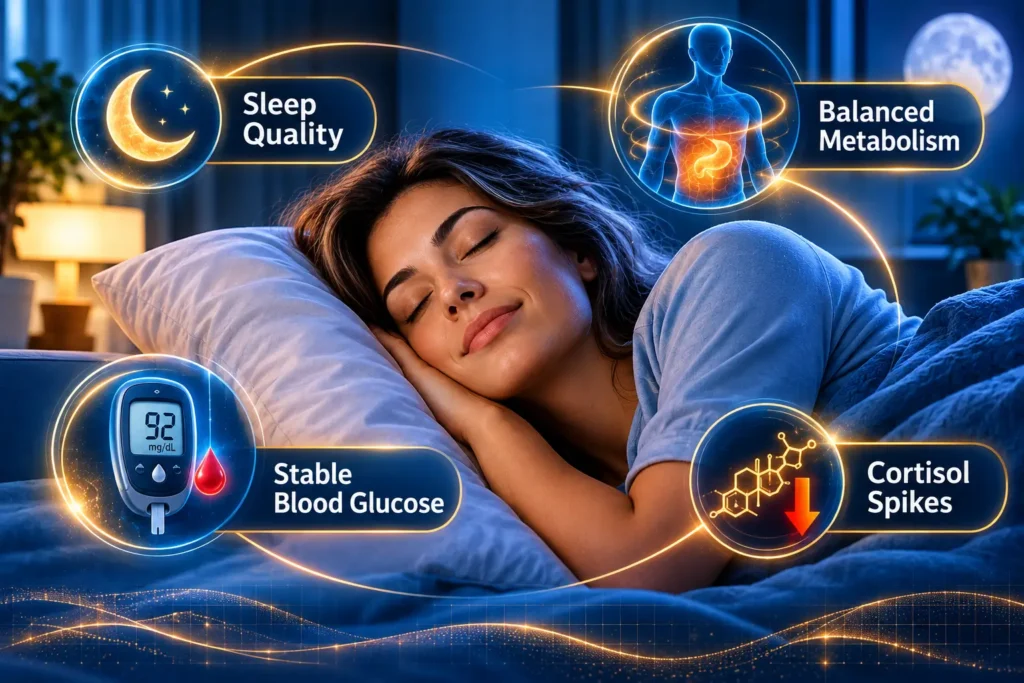
To eliminate late-night starvation triggers, clinical protocols emphasize shifting carbohydrate intake toward dinner, establishing a strict dark room routine to boost endogenous melatonin production, and stabilizing nocturnal blood sugar levels to prevent cortisol spikes that disrupt sleep architecture.
3. Natural Botanical Support for Sleep and Cognition
In addition to dietary adjustments, clinical research highlights the role of natural compounds in restoring circadian balance. Certain botanical extracts help optimize neural recovery and mitigate cognitive fatigue caused by fragmented sleep cycles. For an in-depth analysis of advanced neuro-metabolic formulas, read our detailed Chronoboost 2026 review and ingredient audit to see how targeted cognitive-sleep matrices support overnight rest.
Furthermore, when bedtime anxiety is exacerbated by physical discomfort or persistent sleep latency, evaluating specialized auditory and circadian interventions can be beneficial. Reviewing user feedback and safety reports in our analysis of NiteHush Pro results and complaints helps clarify how non-pharmacological sleep aids perform in real-world scenarios.
Final Thoughts from Carter & Sarah
Waking up hungry at night or fighting midnight cravings is not a personal failure, but a biochemical distress signal from an overworked metabolic system. By stabilizing nocturnal blood sugar, curbing cortisol surges, and supporting your circadian rhythm, you can restore uninterrupted sleep and protect your long-term health.
Scientific Reference: Clinical data published in the National Library of Medicine (PubMed) confirms that nocturnal glucose fluctuations significantly alter REM sleep latency and trigger nocturnal adrenal activation in adults with mild insulin resistance.
Frequently Asked Questions About Late-Night Hunger
Why am I so hungry at night even after eating a full dinner?
If you experience intense hunger shortly after a complete meal, the issue is rarely about caloric intake. It typically indicates insulin resistance or rapid glucose clearance. When high-carbohydrate meals cause blood sugar to spike and rapidly collapse, your brain perceives a sudden energy deficit and triggers ghrelin release, causing midnight cravings despite having consumed enough calories.
Quick Answer: Nighttime Cravings vs. Willpower
Late-night hunger is driven by hormonal imbalances rather than a lack of discipline. Nocturnal drops in circulating blood sugar trigger adrenal cortisol release, waking the brain to demand fast-acting carbohydrates to stabilize energy levels during deep sleep cycles.
Can elevated cortisol make you wake up starving at 3:00 AM?
Yes. Cortisol and glucose operate in a tight feedback loop overnight. If blood sugar plummets during sleep, your adrenal glands secrete cortisol to trigger glucose release from the liver. This stress response increases heart rate and alertness, forcing you awake with an urgent urge to eat simple sugars.
How does stabilizing nocturnal blood sugar improve deep sleep?
When blood sugar remains steady throughout the night, the body avoids emergency adrenal activation. This allows the brain to remain in slow-wave and REM sleep phases undisturbed, promoting proper cellular repair, metabolic balance, and morning alertness without grogginess.
What natural ingredients help reduce nighttime sugar cravings?
Clinically studied botanicals such as Gymnema Sylvestre, Berberine, and Chromium help enhance cellular insulin sensitivity and stabilize glucose fluctuations. Incorporating targeted mineral support, as highlighted in our breakdown of Gymnema Sylvestre benefits for sugar and sleep, assists in curbing late-night appetite triggers naturally.