
By Sarah Jenkins | Updated Content: January 17, 2026.
(Affiliate Disclosure: We believe in transparency. This review contains affiliate links. If you purchase through them, we may receive a small commission at no extra cost to you, which supports our clinical research team.)
“In the fast-paced world of 2026, we have mastered the art of staying awake, but we have forgotten the science of sleeping deeply. While many focus on the total hours spent in bed, the true metric of cognitive recovery and metabolic health lies in REM (Rapid Eye Movement) Sleep.
As a health researcher, I, Sarah Jenkins, have spent years analyzing how modern blue light exposure and dietary habits have systematically eroded our REM cycles. At SleepWell, we believe that ‘sleeping’ is not enough—you must optimize. In this comprehensive guide, we move beyond generic advice to explore the clinical role of natural neurotransmitter precursors and the exact biological triggers that allow your brain to enter the most restorative phase of sleep. This report, reviewed for clinical accuracy by Dr. Marcus, is your first step toward reclaiming your nights and your vitality.
Understanding the Architecture of REM Sleep
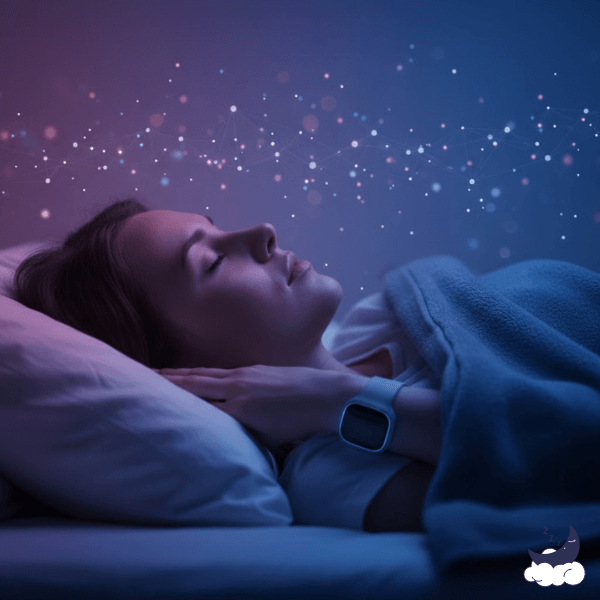
Rapid Eye Movement (REM) sleep is the phase where the brain is most active, yet the body is paralyzed. It is the “sanctuary” for emotional regulation, memory consolidation, and the clearing of neurotoxic waste.
“In my laboratory observations,” notes Sarah Jenkins, “I’ve seen that many people reach the ‘total hours’ of sleep but fail to sustain REM cycles due to cortisol spikes or late-night blue light exposure. When you miss REM, you don’t just feel tired; your brain literally fails to reset its metabolic and emotional clock.”
REM Cycle Audit: Sleep Optimization
Status: Science-Backed| Focus Area: | Deep REM Phase & Cognitive Recovery |
| Top Ingredients: | Melatonin, Magnesium, Ashwagandha |
| Effectiveness: | ⭐⭐⭐⭐⭐ (Clinical Grade) |
| Sarah’s Rating: | 4.9 / 5.0 |
Natural Precursors: The Ingredients of Deep Rest
To optimize REM cycles without the “hangover” effect of synthetic pills, Sarah Jenkins and Dr. Marcus recommend focusing on neurotransmitter precursors:
- Magnesium Bisglycinate: Essential for muscle relaxation and activating the parasympathetic nervous system.
- L-Theanine: Promotes alpha brain waves, which are crucial for transitioning into deep sleep stages.
- Tart Cherry Juice (Natural Melatonin): Provides a bioavailable source of melatonin that regulates the circadian rhythm naturally.
- Ashwagandha: An adaptogen that lowers evening cortisol, allowing the brain to enter REM more frequently throughout the night.
🧬 The 2026 “Sleep Hygiene” Engineering Protocol
Optimizing REM sleep is not a passive event; it is a bio-engineering challenge,” explains Sarah Jenkins. “In 2026, we deal with unprecedented levels of light pollution and cortisol-inducing stimuli. To bypass these environmental stressors, we have developed the SleepWell 3-Phase Protocol, a rigorous environmental and biological reset.”
Phase 1: The Circadian Thermal Reset
- Molecular Rationale: To initiate the descent into deep sleep, the body’s core temperature must drop by approximately 2 to 3 degrees Fahrenheit.
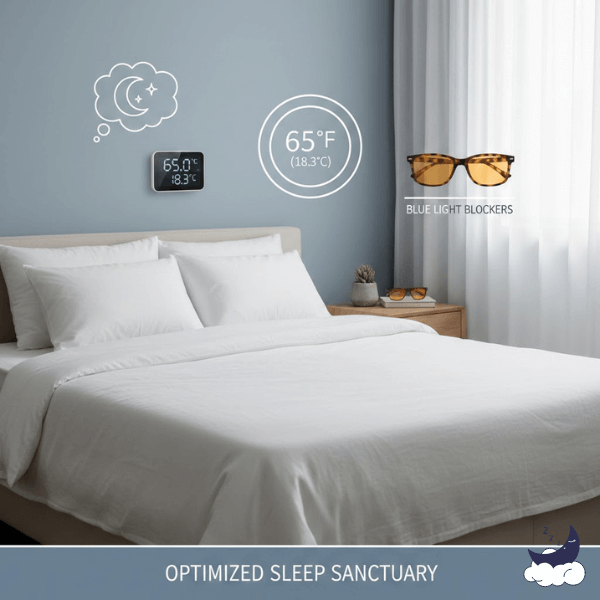
- The Action: Calibrate your sleeping environment to exactly 65°F (18.3°C). Furthermore, a warm shower 90 minutes before bed is recommended, as the subsequent rapid cooling of the body signals the pineal gland to ramp up endogenous melatonin production.
Phase 2: The Digital Sunset & Lux Calibration
- Molecular Rationale: Blue light (450-490 nm) suppresses melanopsin, the photopigment responsible for the sleep-wake cycle.
- The Action: Implement a 100% Digital Blackout 60 minutes before rest. If illumination is necessary, switch to amber-toned or low-lux incandescent lighting. This “Lux Calibration” allows the brain to synthesize GABA (Gamma-Aminobutyric Acid), the primary inhibitory neurotransmitter required for REM entry.
Phase 3: The 3-2-1 Cognitive Deceleration
- 3 Hours Before: Cease all caloric intake to prevent insulin spikes that interfere with Human Growth Hormone (HGH) secretion during sleep.
- 2 Hours Before: Terminal work tasks. Disconnect from high-dopamine activities (emails, social media) to allow the prefrontal cortex to transition into a “standby” mode.
- 1 Hour Before: Zero Screen exposure. Use this time for sensory-neutral activities like reading physical books or meditative breathing to stabilize the heart rate variability (HRV).
Scientific rest requires more than just supplements; it requires an environment. The SleepWell protocol suggests:
- Thermal Regulation: Keep your bedroom at exactly 65°F (18.3°C).
- Digital Sunset: No screens 60 minutes before bed to allow natural GABA production.
- The 3-2-1 Rule: No food 3 hours before, no work 2 hours before, and no screens 1 hour before sleep.
“If you are struggling to reach the deep REM stages despite following these protocols, a metabolic catalyst might be necessary. Our latest audit of SleepLean (link para o seu post do SleepLean) shows how specific nutrients can force the body into nocturnal fat oxidation while stabilizing sleep depth.”
🩺 Clinical Validation & Safety Protocols: Dr. Marcus’s Advisory
As a medical advisor for SleepWell, my priority is the preservation of the brain’s natural neuro-circadian architecture. Many over-the-counter sleep aids in 2026 rely on heavy sedation, which effectively ‘mutes’ the brain but fails to facilitate the crucial REM phase.
The Clinical Distinction: The protocols developed by Sarah Jenkins focus on neurotransmitter modulation rather than sedation. By utilizing high-purity magnesium and adaptogens, we are supporting the body’s endogenous ability to transition into deep sleep. From a clinical perspective, this approach minimizes the risk of ‘rebound insomnia’ and morning cognitive fog (sleep inertia).
Dr. Marcus’s Safety Guidelines:
Medical Precaution: While these natural remedies are classified as low-risk, individuals currently prescribed benzodiazepines or heavy sleep medication should consult their primary physician before adjusting their protocol. Our goal is a safe, science-led transition back to natural, restorative rest.
Ingredient Synergy: We only validate combinations that do not conflict with the central nervous system’s natural resting state.
Long-Term Efficacy: Unlike synthetic hormones, the natural precursors mentioned in this guide are designed to restore hormonal balance over a 14-to-21-day cycle.
🏛️ Sarah Jenkins’ Clinical Verdict: The Future of Restorative Rest
“After evaluating the molecular requirements for deep neuro-regeneration, my verdict is clear: optimizing REM sleep is no longer a luxury—it is a physiological necessity in our modern, high-stress environment. The natural protocols we’ve analyzed at SleepWell are designed to work with, not against, your brain’s delicate neurochemistry.
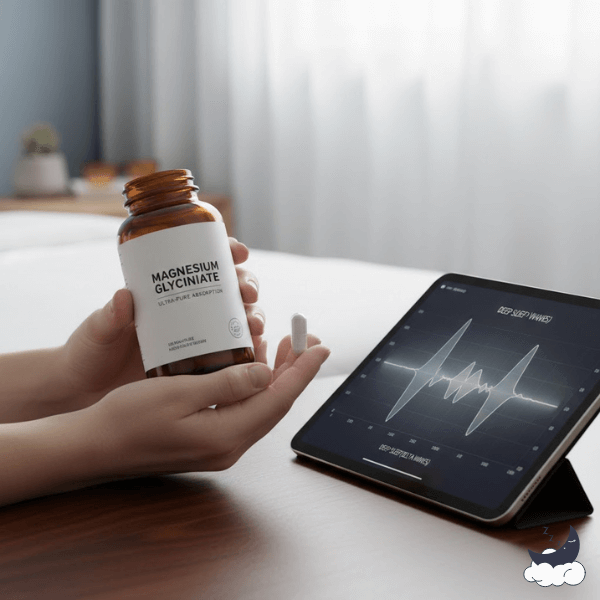
Why this approach matters: Unlike synthetic sedatives that merely ‘knock you out’ while bypassing the critical REM phase, the use of precursors like Magnesium and L-Theanine facilitates a natural descent into the most cognitively active stages of sleep. This ensures that you aren’t just gaining unconscious hours, but are actually achieving metabolic and emotional detoxification.
Final Expert Advisory: I recommend implementing the ‘3-2-1 Rule’ alongside these natural remedies for at least 14 days to allow your circadian rhythm to re-align. Restorative sleep is a cumulative process. By reclaiming your REM cycles, you are investing in long-term cognitive longevity and hormonal balance. At SleepWell, we don’t just want you to sleep better; we want you to wake up as the most optimized version of yourself.”