
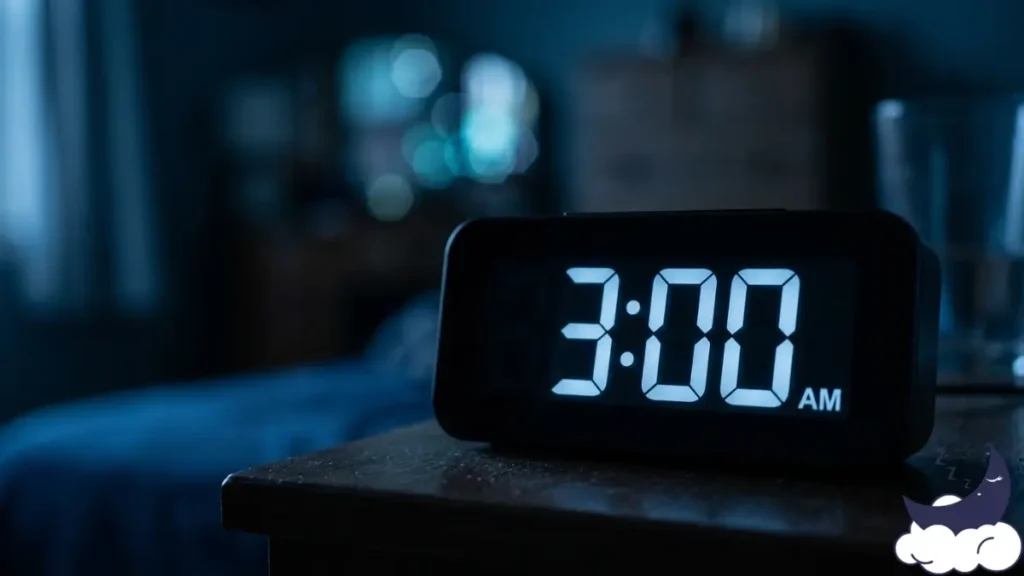
If you are reading this at 3:15 AM, you are not alone. You’ve probably tried warm milk, counting sheep, and even blue-light blockers, yet here you are—staring at the ceiling with your mind racing at a hundred miles per hour.
Most people call this insomnia. I call it a metabolic glitch.
Quick Verdict: Why You Wake Up at 3 AM
Waking up at 3 AM is primarily caused by a nocturnal cortisol spike. This happens when your blood sugar drops too low during the night (Hypoglycemia). To protect the brain, your adrenals release cortisol to trigger glucose production. This surge of adrenaline-like hormone snaps you out of deep sleep into a state of “high alert.”
The Science: Blood Sugar, Cortisol, and Your Biological Alarm
As a health researcher since 2013, I’ve audited thousands of sleep logs. The pattern is always the same. Your body loves stability. When you go to bed after a high-carb dinner or a stressful day, your insulin spikes and then crashes around the middle of the night.
Your brain, which consumes 20% of your body’s energy even while sleeping, senses this drop in fuel. It panics. It doesn’t think “I’m hungry”; it thinks “I am dying.”
3 Ways to Stop the 3 AM Wake-Up Call
1. The “Protein Bridge”
Stop eating high-sugar snacks before bed. Instead, try a small amount of high-quality protein or healthy fat 30 minutes before sleep (like a spoonful of almond butter). This acts as a “bridge” to keep your glucose stable until morning.
2. Magnesium Glycinate Optimization
Not all magnesium is equal. Only Magnesium Glycinate has the calming effect needed to blunt the cortisol response. It crosses the blood-brain barrier and tells your nervous system it is safe to stay under.
3. Temperature Regulation
Heat is a cortisol trigger. If your core temperature doesn’t drop, your body stays in a state of metabolic stress. Keep your room at 65°F (18°C) to facilitate the deep REM cycle.
Is it time for a “Metabolic Reset”?
If you’ve tried the tips above and still find yourself alert in the middle of the night, your nocturnal oxidation levels might be out of sync. This is where most traditional sleep aids fail—they sedate you, but they don’t stabilize you.
In our 2026 audit of the top sleep-support formulas, we looked for products that specifically target nocturnal glucose stability. Only one met our “since 2013” gold standard for metabolic recovery.
Scientific References:
1. Journal of Clinical Endocrinology & Metabolism: Nocturnal Hypoglycemia and Cortisol Response.
2. Sleep Foundation: The Role of Magnesium in GABA Regulation.